












italiano
CAREL
  • about us
  • products
  • quick link
  • news
  • press office
  • job & careers
  • site map
mission history branches
all products AC controls REF controls Humidification sys. solutions for... literature
ksa 1TOOL plantVisorPRO humiTOOLS literature case study
speaking about us press releases carel news advertising


home : air-conditioning controls
air conditioning controls
WHAT...
Chillers
Chillers are compression water coolers, and can be divided, according to the fluid used to cool the condenser, into air- or water-cooled units.
This division into air-water and water-water chillers is followed by a further differentiation according to the number of refrigerant circuits:
  • single circuit chiller, normally fitted with one hermetic or semi-hermetic compressor
  • two circuit chiller, which may use one or more compressors working in parallel, with a maximum of four per circuit
  • multiple circuit chiller, fitted with just one compressor per circuit (up to a maximum of four)
The normal range of cooling capacities of the systems installed in Europe varies between 100 and 500 kW. This range includes air-cooled chillers, while water-cooled chillers may often have higher capacities.
For both types of systems, scroll compressors are used in the low-medium capacity range (up to 200 kW), while for higher capacities (300- 900 kW), screw and centrifugal compressors are prevalently used.
As the chiller requires significant energy for its operation, a great deal of effort has been focused on reducing energy requirements. Over the years, in fact, the average performance of refrigeration systems has been improved, and the efficiency of the compressors and the heat exchangers increased. Further gains are possible through the optimisation of the management of the units and systems.
Roof-top units
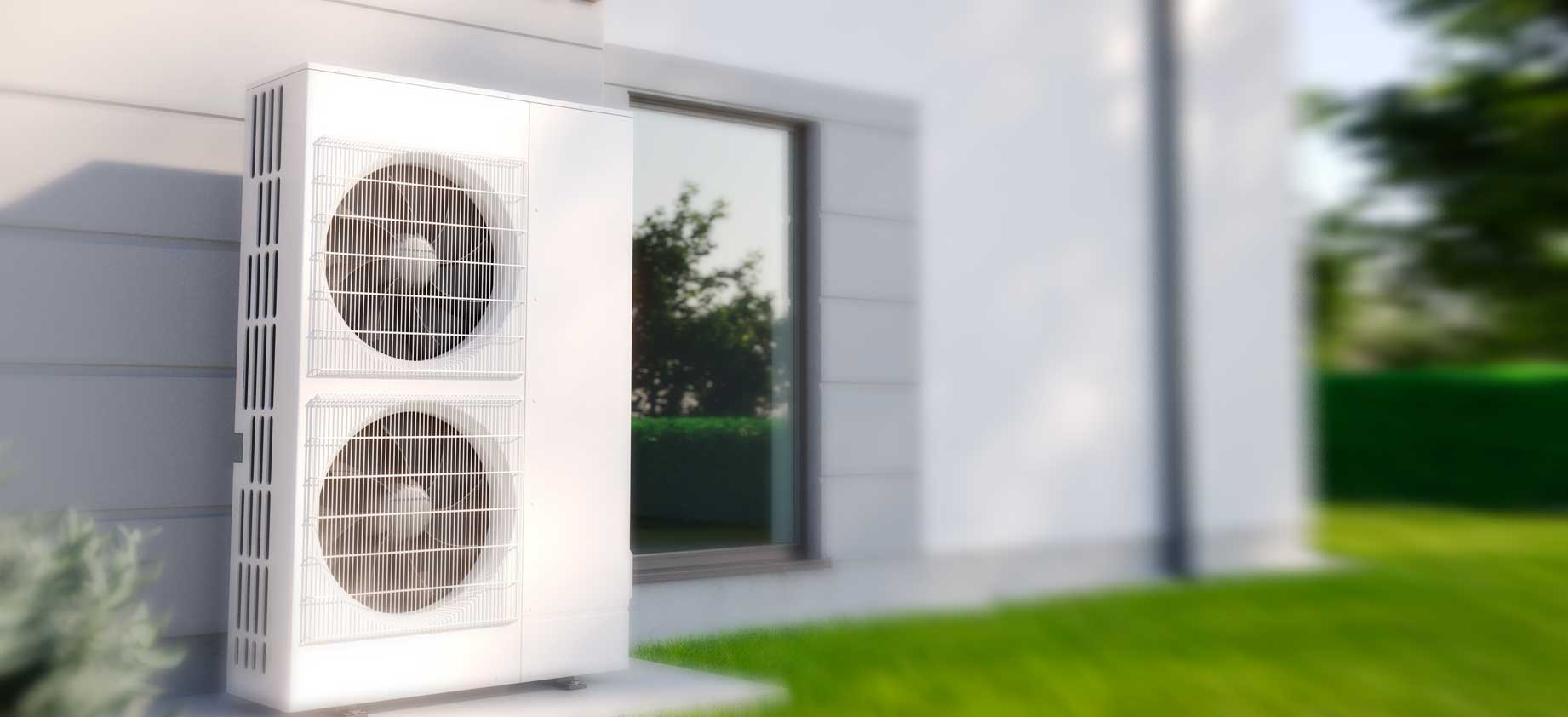
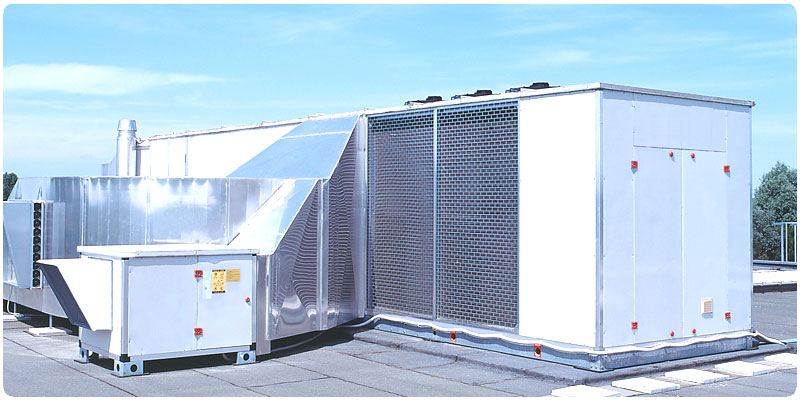
The substantial difference between chillers and roof-top units is the fact that the latter use air on both the condenser side and the evaporator side.
These air-conditioning units are installed outdoors, and the conditioned air is then distributed into the environment through a system of ducts.
A centrifugal fan is fitted on the evaporator so as to channel the cooled air into in the ducts.
In units with a capacity of up to 30 kW, only one hermetic reciprocating compressor is used, with just one refrigerant circuit. In the 30-90 kW range, two hermetic compressors are used in two independent refrigerant circuits, while over 90 kW two semi-hermetic compressors are commonly used in two independent refrigerant circuits.
   
Precision air-conditioners
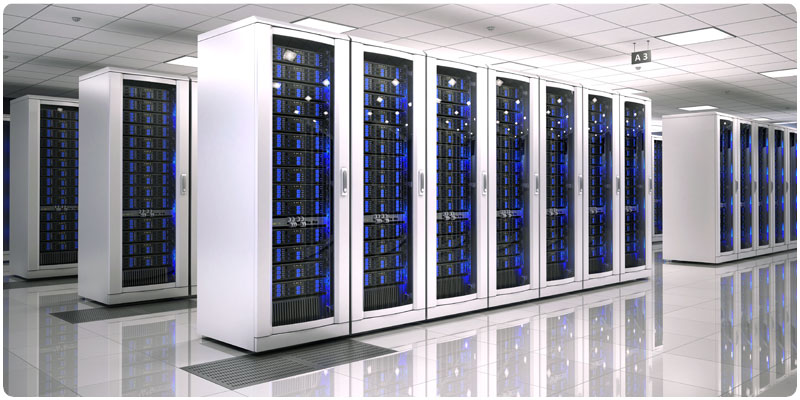
Precision air-conditioners are divided, according to the fluid used to cool the condenser, into air- or water-cooled units. The two types differ based on the type of installation: the air-cooled units are usually installed outdoors, while the water-cooled units are commonly located inside the environment being air-conditioned.
As the main use of these units is in data processing centres, and they are preferably installed inside the environment itself, so as to avoid tampering and to ensure correct and extended operation (up to 8760 hours per year).
In addition, these units must ensure a high degree of reliability, given that the shutdown of the air-conditioning system may cause irreversible damage and consequently significant economic losses.
   
Shelters
Shelters are a special type of precision air-conditioner designed especially for the air-conditioning of unsupervised telephone installations, where almost always there is no space inside the facility for the installation of the air-conditioning unit. As well as mechanical cooling, these units are able to provide cooling by the inlet of outside air (freecooling), using a system made up of dampers and fans.
   
Air handling units
Air handling units are made up of various different sections, each of which has a specific function in the treatment of the air.
Modularity is the most evident characteristic of these systems, as they are designed and sized based on the specific requirements of the application.
Throughout the year these units may perform different air handling functions:
- mixing, filtering and movement of recirculated and outside air;
- pre- and post-heating of the air
- cooling of the air
- humidification and dehumidification of the air.
Air handling systems do not include the elements for the production of the hot and cold fluids used for the heat exchange processes with the air. Boilers and chillers must therefore be installed separately.

AC focus

  • 07/08/2008 - Novità in Carel

    CAREL Ireland: a new CAREL Affiliate

  • what is air-conditioning?

  • cooling...

  • elements in the refrigerant circuit

  • types of compressor

  • inverter technology

  • what...

  • where...

  • integrated solutions & energy saving

A complete range of HVAC/R controllers

  • legal notice
  • find us
webcode by Dadoquadro
Carel copyrightCarel PI
powered by xportal