














Climate control is the thermal and hygrometric treatment of the air in an environment. This process also involves the purification, filtering, distribution and ventilation of the air, so as to achieve optimum bio-climatic conditions, in both summer and winter.
The fundamental, albeit increasingly inexistent difference between air-conditioning and climate control is that the former uses the refrigeration process to eliminate the heat from the environment, distributing the cool air produced using a fan, and to decrease the level of humidity, thus creating optimum bio-climatic conditions during the summer. The latter, on the other hand, as well as producing cool air and dehumidifying the environment, also exploits a heat pump cycle, that is, reverses the refrigerant circuit so as to remove heat from the outside and consequently heat the inside environment.
The operating principle of the refrigeration process involves the combined action of a number of mechanisms, which exploit the properties of a substance (refrigerant) that can absorb the heat from the environment in the evaporation phase, and dissipate it in the condensation phase.
In fact, the action of the refrigerant inside the circuit can be divided into two phases:
the refrigerant changes from the liquid to the gaseous state by absorbing a certain amount of heat from the surrounding environment (corresponding to the latent heat of vaporisation), thus cooling the environment. This occurs at low temperatures and pressures.
the refrigerant, in the gaseous state, gives up the absorbed heat, and returns to the liquid state; the cycle then starts again.
The main components in a mechanical refrigeration system are:
Compressor: its function
is to draw in the superheated gas refrigerant arriving from the evaporator,
compress it, and then deliver it to the condenser, where it will become
liquid again. The mechanical operation of the compressor implies an
increase in the heat contained in the vapour. The compression increases
the pressure of the vapour and consequently its temperature.
Condenser: this absorbs the heat from the gas that evaporates in the evaporator (plus the heat of compression), causing it to condense. In refrigeration systems, the condenser is made up of finned tubes or a coil containing a refrigerant, and may be cooled: by air, by water, or through a tube bundle.
Expansion valve: this has the function of lowering the pressure of the gas arriving from the condenser, so as to decrease its boiling point and consequently its evaporation temperature.
Evaporator: this allows the liquid refrigerant that arrives from the condenser through the expansion device to accumulate. By removing heat from the air that flows through the evaporator, the liquid refrigerant evaporates, while maintaining a constant pressure.
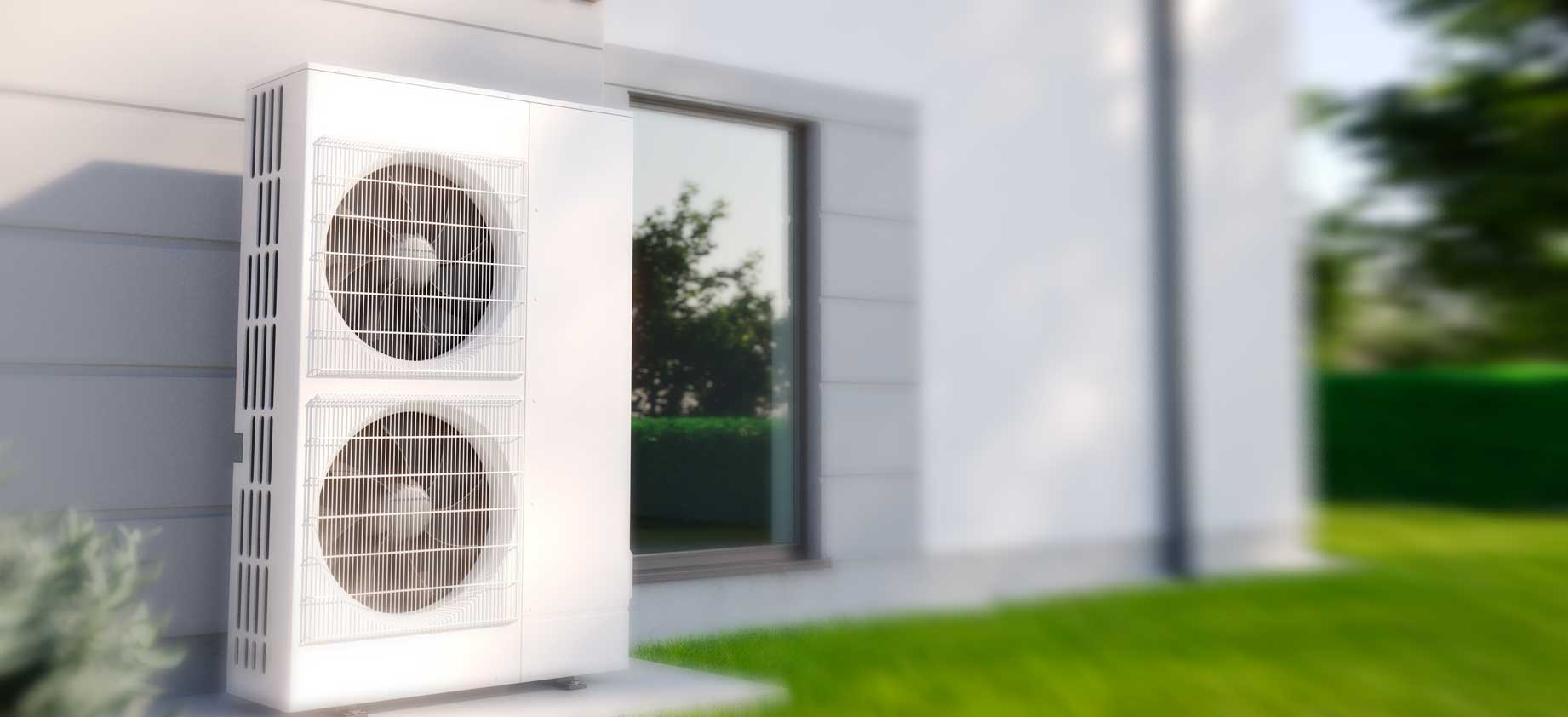
Fans: these are used for ventilation both inside and outside the environment. Inside, the fans draw in air from the environment and force it through the evaporator, where it is cooled before returning to the environment. Outside, the fans have the purpose of cooling the refrigerant, by blowing the air through the condenser.
In a refrigeration system, the refrigerant is used to absorb heat from one area and transfer it to another. As a result, its is important to optimise the rate of heat transfer. To ensure this, the materials used must feature good thermal conductivity, such as copper and aluminium. Another way of improving the transfer of heat is to enlarge the surfaces of the condenser and the evaporator.